




by Brightmine Editorial Team
Understanding what employers can and cannot regulate regarding employees’ off‑duty conduct is essential for any organization seeking to stay compliant while protecting its brand, culture, and workforce. Many states have enacted laws that restrict employer oversight of lawful activities employees engage in outside of work, making it critical for HR professionals to stay informed.
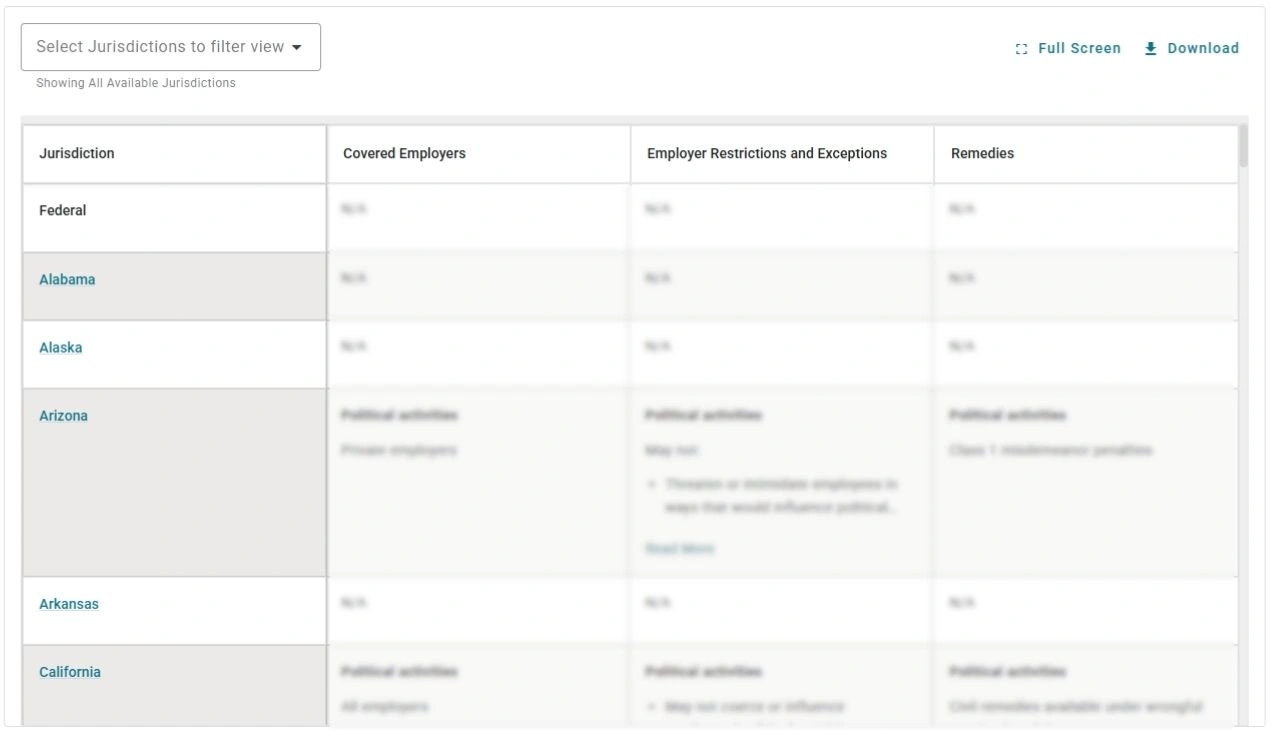
Our Employee off‑duty behavior laws by state chart gives HR teams a clear, reliable breakdown of these laws, helping organizations avoid compliance risks and ensure consistent, fair employee relations across jurisdictions. This resource is especially important for multistate employers who must navigate varying state protections around lifestyle choices, political activities, and civic involvement.
What employers need to know
Before disciplining an employee or implementing an off‑duty conduct policy, HR leaders should evaluate applicable state and local laws. Many states protect employees engaging in lawful activities outside working hours. These protections often apply to behaviors such as:
- Smoking or drinking outside of working hours
- Participating in political activities
- Volunteering in civic or community organizations
These state protections help ensure employees are not unfairly penalized for personal, legal activities that do not impact workplace performance.
How state laws apply
Although many states have protections in place, laws also outline specific exceptions. These exceptions define when employers may restrict employee off‑duty behavior, particularly when such conduct creates conflicts of interest, violates company policy, or impacts legitimate business interests.
Our chart identifies:
- States with laws applying to private employers
- States with protections applying only to public-sector employees
- Jurisdictions with no off‑duty behavior protections (N/A)
This clarity helps HR teams apply consistent policies while respecting employee rights.
Want to see more?
For full access to Employee off-duty behavior laws by state, sign up to a HR and Compliance Center subscription today.
You may also be interested in…
About the author

Our in-house team of HR experts carefully monitors and updates the Brightmine HR & Compliance Center, the most comprehensive library of employment law and HR resources. This team has an unrivaled wealth of subject matter expertise, with an average of 15 years’ experience. They also bring invaluable, diverse career experiences to the table—the team includes seasoned employment law attorneys, former in-house counsel, SHRM certified professionals and career employment law editors.
In addition to managing the HR & Compliance Center, the Editorial Team supports the content across the Brightmine product portfolio. The Team also supports Marketing Resource Center with breaking HR news, Commentary and Insights, and expert review of key compliance resources, such as our free charts.
Follow Brightmine on LinkedIn
Sign up to receive expert HR insights from Brightmine
Join our community and stay updated with industry trends, expert insights, valuable resources, webinar invites… and much more.
Sign up now and receive regular updates straight to your inbox!