

by the Brightmine Editorial Team
Workplace flexibility has been embraced by HR and many employers as a positive workplace practice. Flexible scheduling’s positive aspects for the workplace include:
- Promoting work-life balance;
- Reducing stress;
- Promoting improved planning; and
- Offering an affordable and reasonable accommodation to ensure compliance under disabilities laws.
While workplace flexibility initiatives continue to be a strategic option for many employers, some jurisdictions have passed laws protecting an employee’s right to request flexible working options without fear of retaliation.
In addition, certain jurisdictions have gone further than right-to-request flexible arrangements laws by introducing more taxing requirements. These scheduling laws, alternately referred to as predictive, secure, fair or predictable, impose an increased number of requirements on employers in addition to extending retaliation protections to employees.
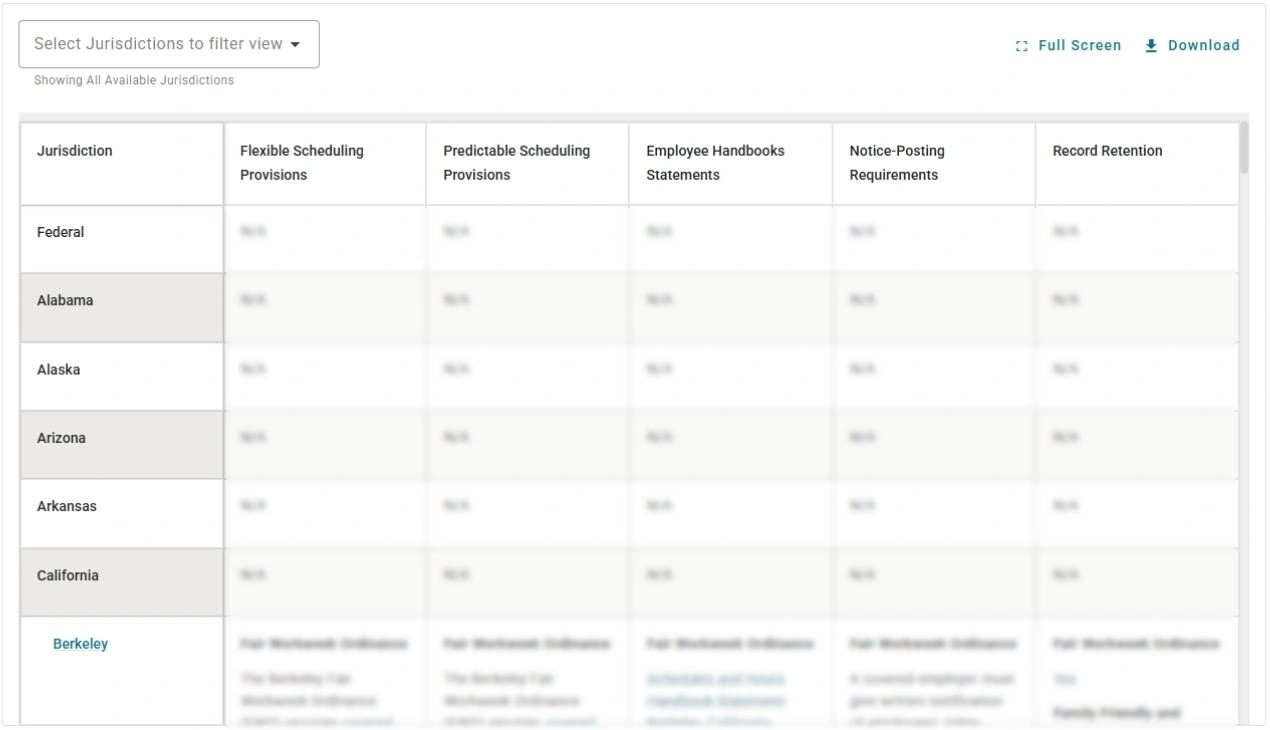
Our 50 state chart summarizes information regarding state and municipal scheduling laws. Where applicable, the chart links to the Employment Law Guide for further details, as well as the Employee Handbooks and Policies and Procedures tools.
Want to see more?
For full access to our 50 State Chart:
Scheduling laws by state and municipality
, sign up for an HR and Compliance Center subscription today.
You may also be interested in…

Why organizational alignment breaks between functions
Policy, reward and manager guidance are often owned by different teams, so reasonable local decisions can add up …
California captive-audience ban remains blocked
The 9th Circuit has upheld a preliminary injunction blocking California from enforcing its ban on captive audience meetings, …
Ask our experts: Avoiding payroll gaps when changing pay frequency from semimonthly to biweekly
Learn how to avoid payroll compliance gaps when changing pay frequency from semimonthly to biweekly, including PTO, overtime …
About the author

Brightmine
With more than 10,000 customers, Brightmine is a leading global provider of people data, analytics and insight – empowering HR leaders to deliver brighter business outcomes.
For more than two decades, Brightmine, formerly XpertHR, has continued to help HR leaders confidently navigate the evolving world of work through our unique combination of critical workforce data, AI-enabled technology, and trusted HR expertise.
Brightmine is a division of LexisNexis Data Services within RELX®, a global provider of information-based analytics and decision tools. RELX serves customers in 180+ countries with 35,000+ employees. Ticker: London: REL; Amsterdam: REN; New York: RELX.