



by the Brightmine Editorial Team
Fair‑chance hiring has become a major priority for HR teams as more states and localities adopt “ban-the-box” laws that restrict when employers may ask about a candidate’s criminal history. These laws are designed to promote equitable hiring by preventing automatic disqualification and ensuring applicants are evaluated based on their skills and qualifications rather than past convictions.
Across the country, jurisdictions are increasingly delaying when criminal history inquiries may occur, often prohibiting employers from asking about convictions until later stages in the hiring process such as after an interview or once a conditional offer has been made. This approach supports reintegration, expands talent pools, and reduces bias in recruitment.
Many states also impose related restrictions on the use of credit history in employment decisions, reinforcing the broader move toward fair, transparent, and inclusive hiring practices. HR leaders must stay ahead of this evolving legal landscape to ensure compliance while strengthening their employer brand.
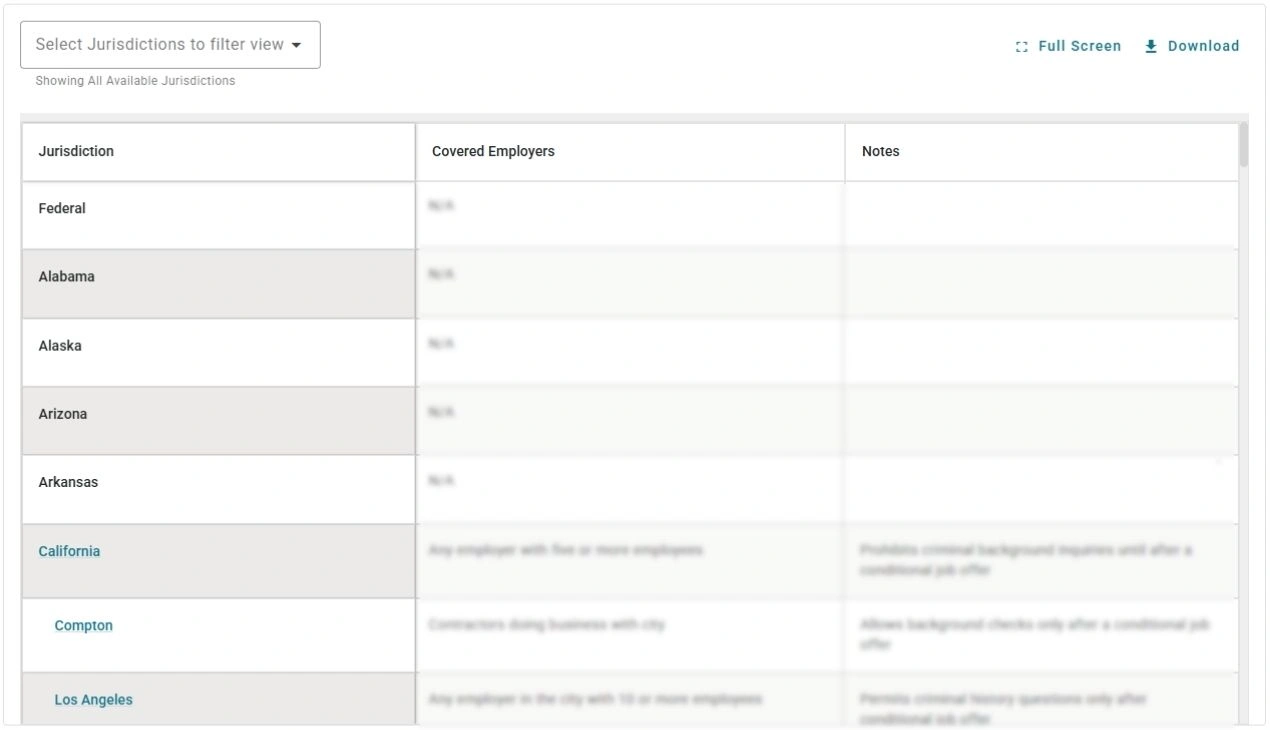
Our comprehensive 50‑state chart gives HR professionals a clear overview of ban‑the‑box laws at both state and local levels, helping organizations quickly understand where restrictions apply and how they affect private‑sector hiring. In light of these regulations, employers should review and update their employment applications and hiring processes to align with fair‑chance standards and minimize legal risk.
Want to see more?
For full access to Ban-the-box laws by state and municipality, sign up to a HR and Compliance Center subscription today.
You may also be interested in…

Salary history inquiry laws by state
Find state-by-state salary history inquiry restrictions, including rules governing compensation discussions with job applicants.
New hire paperwork and notice requirements by state
A complete state‑by‑state breakdown of required new‑hire forms and notices to support HR teams managing multi‑state workforces.
New hire reporting
New hire reporting requirements vary by state and employer size. Understanding your obligations helps ensure compliance with federal …
About the author

The Brightmine Editorial Team
Our in-house team of HR experts carefully monitors and updates the Brightmine HR & Compliance Center, the most comprehensive library of employment law and HR resources. This team has an unrivaled wealth of subject matter expertise, with an average of 15 years’ experience. They also bring invaluable, diverse career experiences to the table—the team includes seasoned employment law attorneys, former in-house counsel, SHRM certified professionals and career employment law editors.
In addition to managing the HR & Compliance Center, the Editorial Team supports the content across the Brightmine product portfolio. The Team also supports Marketing Resource Center with breaking HR news, Commentary and Insights, and expert review of key compliance resources, such as our free charts.