


by the Brightmine Editorial Team
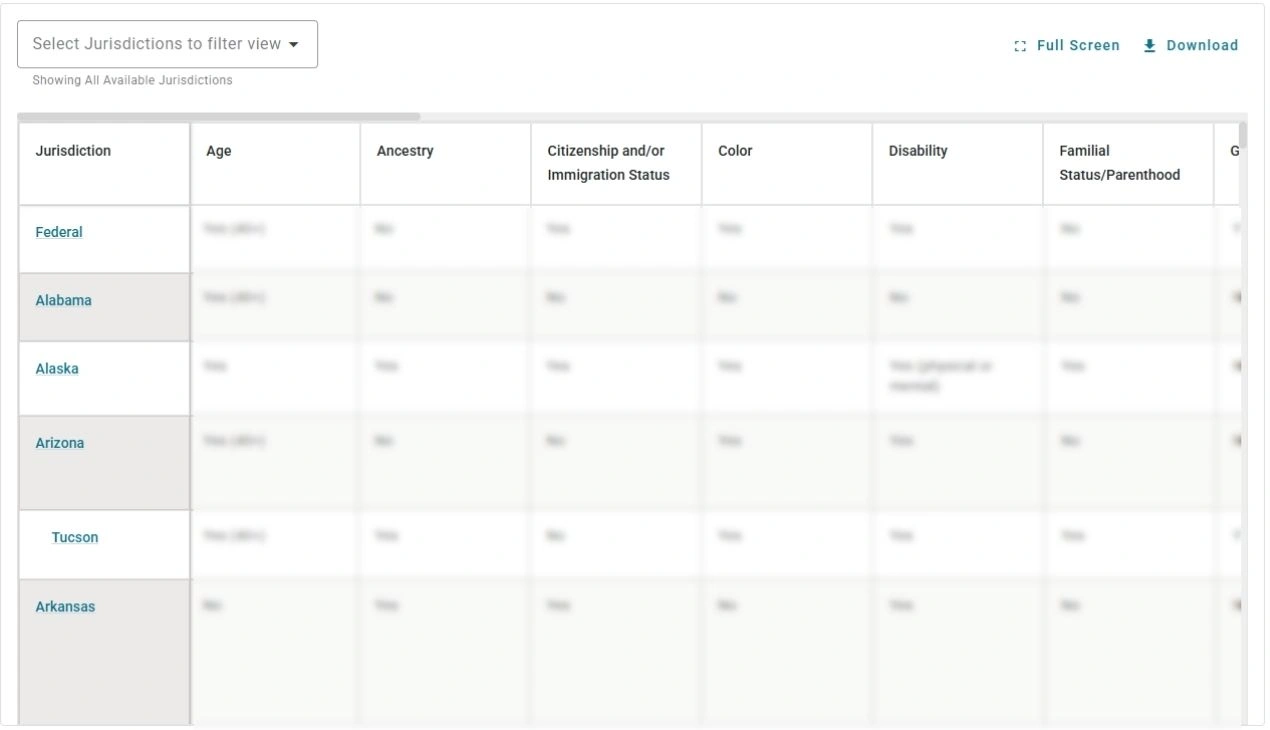
The following chart summarizes key provisions of federal and state laws regarding the recording of employee communications and video surveillance of employees. These laws generally apply to all employers, with limited exceptions for law enforcement and some public employers.
Under the federal National Labor Relations Act, employers are prohibited from conducting video surveillance of employees under certain circumstances, including monitoring, or giving the impression of monitoring, employee union activity.
States with no requirements regarding the recording of communications or video monitoring of employees are marked N/A. In the absence of state requirements, federal law may apply.
An employer should have a legitimate business reason for monitoring employees’ workplace communications and activities. Providing advance notice of the reasons may help reduce the risk of invasion of privacy claims.
For more information on how an employer can monitor employee activity in the workplace, see How to Conduct Video Surveillance and How to Monitor Employee Telephone Use.
Want to see more?
For full access to our 50 State Chart:
Recording communications and video surveillance laws by state
sign up for an HR and Compliance Center subscription today.
You may also be interested in…

Beyond the ADA: Meeting emerging accommodation challenges
Explore emerging accommodation challenges beyond the ADA, including religious, pregnancy, reproductive health, mental health, neurodiversity and AI-related issues, …
EEO protected classes by state
Explore state‑by‑state EEO protected classes to help HR teams understand discrimination laws and maintain compliant employment practices.
Pregnancy accommodation laws by state
Explore pregnancy accommodation laws by state and municipality, including employer requirements for reasonable workplace accommodations.
About the author

The Brightmine Editorial Team
Our in-house team of HR experts carefully monitors and updates the Brightmine HR & Compliance Center, the most comprehensive library of employment law and HR resources. This team has an unrivaled wealth of subject matter expertise, with an average of 15 years’ experience. They also bring invaluable, diverse career experiences to the table—the team includes seasoned employment law attorneys, former in-house counsel, SHRM certified professionals and career employment law editors.
In addition to managing the HR & Compliance Center, the Editorial Team supports the content across the Brightmine product portfolio. The Team also supports Marketing Resource Center with breaking HR news, Commentary and Insights, and expert review of key compliance resources, such as our free charts.