




by Anthony J. Oncidi and John P. Barry, Proskauer Rose, LLP
Noncompete agreements remain an important tool for employers who need to protect confidential information, customer relationships, and competitive advantage. Because there is no federal standard for noncompetition clauses, HR leaders must navigate a complex and inconsistent landscape of state laws. Understanding what is enforceable, restricted, or prohibited in every state is essential for reducing legal risk and maintaining compliant hiring and retention practices.
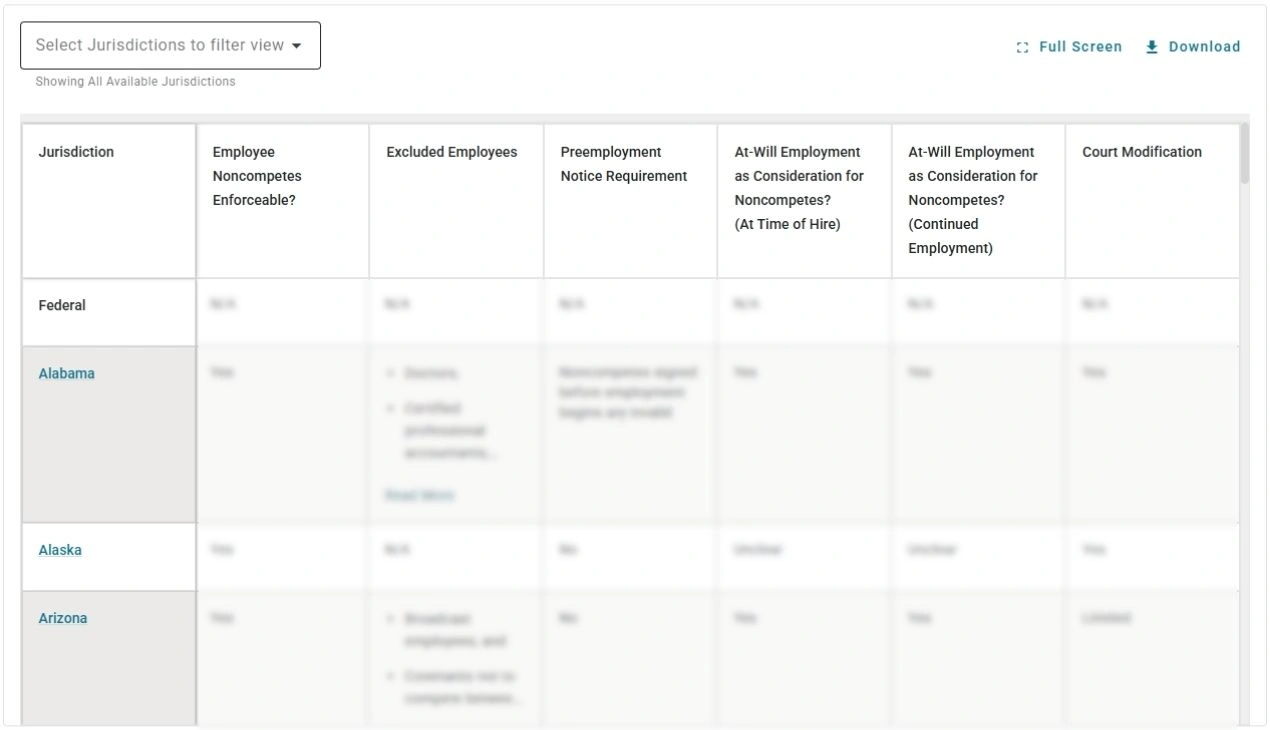
Our comprehensive Fifty state chart of Noncompete laws provides HR and talent acquisition teams with a clear and updated overview of noncompete laws across the United States. It outlines where noncompete agreements are permitted, where they are limited by industry or income thresholds, and where they are completely prohibited. States continue to introduce significant reforms, including full bans and income based restrictions. Employers must stay informed to avoid invalid agreements, compliance gaps, and potential penalties.
For HR teams supporting employees in multiple states, this resource simplifies compliance by detailing essential enforceability factors, including:
- Whether a noncompete agreement is allowed in each state and under what conditions.
- Industry specific limitations, including professions where noncompetes are restricted or forbidden.
- Required notices and rules governing when agreements must be presented during the hiring process.
- What counts as valid consideration, such as whether at will employment is sufficient.
- Court modification standards, including whether states follow blue pencil, strict blue pencil, or no modification rules.
Noncompete laws continue to change rapidly across the country. Several states now ban noncompetes completely, while others enforce them only for higher earning employees or in specific industries. Many states are also expanding requirements around notice and review periods, placing greater responsibility on employers to ensure fairness and transparency in restrictive covenant agreements.
Our chart equips HR professionals to evaluate their noncompete practices, update outdated agreements, and ensure alignment with the latest legal standards. As enforcement tightens and new legislation emerges, creating compliant and strategically designed employment agreements is vital for protecting both the organisation and its workforce.
Want to see more?
For full access to Noncompete Laws by State, sign up to a HR and Compliance Center subscription today.
You may also be interested in…
About the author

Anthony J. Oncidi
Proskauer Rose, LLP
Anthony J. Oncidi represents employers from a wide range of industries in all aspects of labor relations and employment law, including wage and hour matters, class actions, wrongful termination, employee discipline, Title VII and the California Fair Employment and Housing Act, workplace violence, drug testing and privacy issues. He also conducts sexual harassment training and investigations and assists in executive employment contract disputes, SOX claims and employee raiding and trade secret protection
A substantial portion of his practice involves the defense of employers in employment discrimination and harassment litigation in state and federal court as well as arbitration proceedings. Mr. Oncidi has testified as an expert witness and has served as a faculty member of the National Employment Law Institute.
Sign up to receive expert HR insights from Brightmine
Join our community and stay updated with industry trends, expert insights, valuable resources, webinar invites… and much more.
Sign up now and receive regular updates straight to your inbox!