




by the Brightmine Editorial Team
Employers that have employees who telecommute from a different state than the one in which the employer’s business operations are located, or nonresident employees who go into the employer’s office to perform work, must correctly determine whether to withhold income tax from the pay of such employees for the employer’s state, the states from which the employees telecommute and/or live, or both.
When states are party to a reciprocal agreement, employees who live in and work in either of the two states are subject only to the income tax of their state of residence. However, employers are usually still required to withhold income tax from the pay of nonresident and telecommuting employees for their respective states of residence and register with and remit the withholdings to the tax agencies of those states. The chart also includes the names of and links to any forms that nonresident employees must complete and submit to their employer to verify their state of residence.
In addition, certain employers that send employees to work in other states for a short time period (e.g., nonresident short-term-service employees, disaster or emergency response employees, transportation and movie production employees) need to know whether they must withhold income tax for those other states for the work their employees perform there. Many states provide a withholding exemption for such nonresident employees (and some require or request that the out-of-state employer provide the state tax agency with information verifying its employees’ activities in that state).
An employer that fails to properly withhold income taxes may be subject to costly noncompliance penalties and fines and may have to make time consuming payroll corrections. The following chart helps employers avoid withholding risks and penalties by summarizing each state’s reciprocal income tax withholding agreements and/or other nonresident income tax exemptions.
For purposes of this chart, an indication of N/A means that a state either does not have an income tax, or a reciprocal agreement with any other state and/or any exemptions for nonresident employees working in the state. In addition, the term Jurisdiction refers to the state(s) in which an employer has business operations.
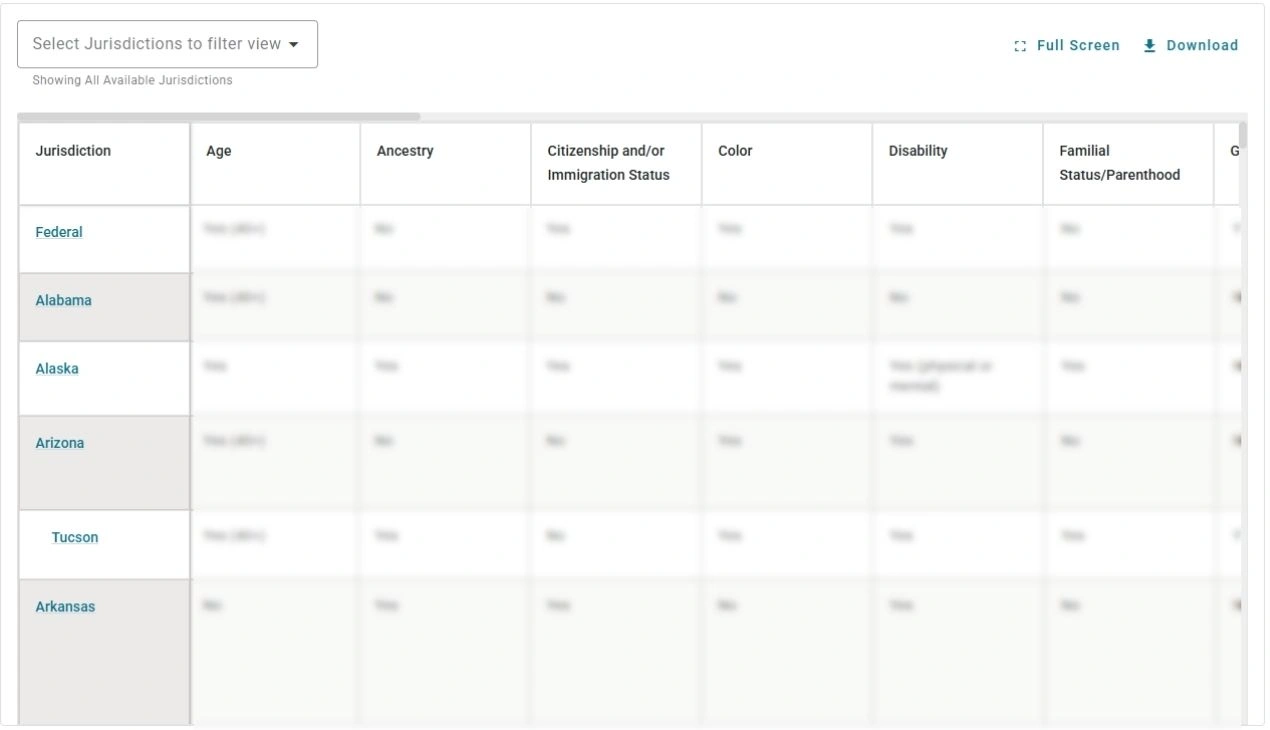
Want to see more?
For full access to our 50 State Chart:
Income tax withholding reciprocal agreements and other exemptions by state
, sign up for an HR and Compliance Center subscription today.
You may also be interested in…

Taxation of key fringe and retirement benefits by state
Find state-by-state taxation rules for fringe benefits, 401(k) contributions, cafeteria plans and other employee benefits.
Taxation of supplemental wages by state
Understand how supplemental wage withholding requirements vary by state, including differences from federal payroll tax rules.
Internal revenue code conformity by state
Understand how each state aligns with the Internal Revenue Code and what HR teams must know to reduce …
About the author

The Brightmine Editorial Team
Our in-house team of HR experts carefully monitors and updates the Brightmine HR & Compliance Center, the most comprehensive library of employment law and HR resources. This team has an unrivaled wealth of subject matter expertise, with an average of 15 years’ experience. They also bring invaluable, diverse career experiences to the table—the team includes seasoned employment law attorneys, former in-house counsel, SHRM certified professionals and career employment law editors.
In addition to managing the HR & Compliance Center, the Editorial Team supports the content across the Brightmine product portfolio. The Team also supports Marketing Resource Center with breaking HR news, Commentary and Insights, and expert review of key compliance resources, such as our free charts.