


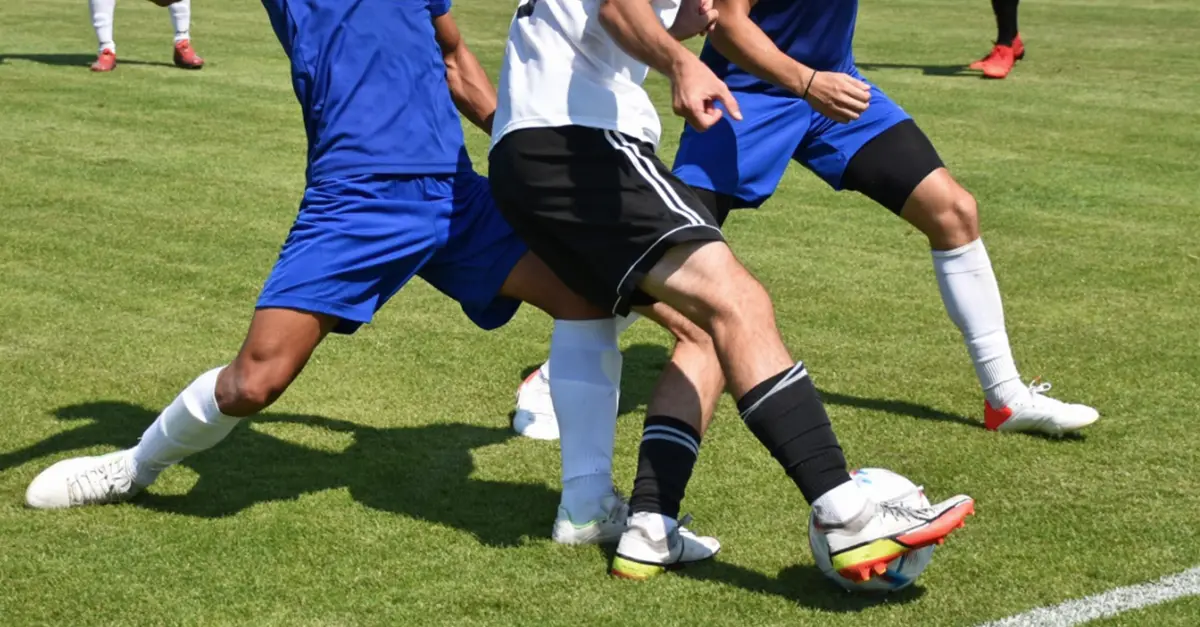
The 2026 World Cup football tournament kicks off in June with co-hosts Mexico taking on South Africa in Mexico City. Hosted by the US, Mexico and Canada it will be the biggest ever World Cup as 48 nations compete – up from 32 – between 11 June and 19 July 2026.
Employers should plan ahead to make the most of the impact that this large sporting event can have on staff morale, while also planning ahead to minimise disruption.
Employers are likely to see a significant amount of interest among their workforces in the World Cup 2026, particularly given that both England and Scotland have qualified.
That said, because of the time difference, the 104 football matches mainly take place late evening or early morning, with games kicking off between 5pm and 5am. See England and Scotland’s fixtures below.
1. Think about staff morale
Employers can use the tournament to raise their workforce’s morale. Provided that operational needs allow, employers can:
- Screen key matches in the workplace
- Allow employees to watch games together during working hours (for hybrid or remote workers, this could include arranging remote “watch-alongs”)
- Permit special decorations to be temporarily displayed in workplaces (such as flags of participating countries)
- Temporarily relax dress codes (for example, allowing football shirts to be worn)
Workplace events related to the World Cup should therefore be optional and workers should not be disadvantaged or derided if they do not want to take part.
2. Increase working hours flexibility during the tournament
To further improve morale and boost employee relations, employers may permit temporary changes to working patterns to allow employees to watch games. For example, employers could let employees:
- Finish early to watch an early-evening game; or
- Take a couple of hours off to watch a match and make up the lost time later
Employers may see an increase in holiday requests from employees who want time off to watch matches.
Employers could be flexible with holiday requests – for example, by allowing requests at short notice where this is feasible.
3. Maintain workforce productivity during the matches
Some employers may experience a reduction in productivity because employees are watching matches when they should be working.
This could become a particular problem when the employee is working from home, and the employer has less control over their activities during working hours.
It is a good idea for employers to remind employees in advance of the World Cup, or in advance of key games, that they should not be watching the football when they should be working.
Employers can also warn employees about unauthorised absence, for example pulling a sickie to watch games, or taking sick leave on the day after a game because they have a hangover.
4. Beware the risk of discrimination during 2026 World Cup
Employers need to be aware of the potential discrimination issues that could arise. In particular, employers should ensure that: if they offer special arrangements for home nation fans, such as increased flexible working, they offer the same arrangements to fans from other countries; and staff are made aware that harassment linked to the event, for example hostile or racist remarks about a particular country, will not be tolerated.
5. Remind employees of their responsibilities outside work
Matches will be shown in public places across the UK such as pubs and fan parks, where alcohol will be plentiful.
News of incidents and bad behaviour can spread like wildfire on social media. To reduce the risk of reputational damage, it is good practice for employers to remind employees that they should behave themselves outside work when watching the football.
It is settled case law that employers can take disciplinary action for misconduct outside work, and this is a potentially fair reason for dismissal. In the key case Post Office v Liddiard, the Court of Appeal accepted that an employee was fairly dismissed after his involvement in football hooliganism brought his employer into disrepute.
World Cup 2026: England and Scotland fixtures (BST)
Group stages (confirmed)
- Haiti v Scotland – Sunday 14 June, Boston, 2:00am (Saturday night)
- England v Croatia – Wednesday 17 June, Dallas, 9:00pm
- Scotland v Morocco – June 19, Boston, 11:00pm
- England v Ghana – June 23, Boston, 9:00pm
- Scotland v Brazil – June 24, Miami, 11:00pm
- Panama v England – June 27, New York/New Jersey, 10:00pm
Knockout phase (if teams win group and proceed)
- Scotland v TBC – Monday 29 June, Houston, 6:00pm
- England v TBC – Wednesday 1 July, Atlanta, 5:00pm
- Scotland v TBC – Sunday 5 July, New York/New Jersey, 9:00pm
- TBC v England – Monday 6 July, Mexico City, 1:00am (Sunday night)
- Quarter-final: Scotland v England – Saturday 11 July, Miami, 10:00pm
- Semi-final: England or Scotland v TBC – Wednesday 15 July, Atlanta, 8:00pm
Knockout phase (if teams are second in group and proceed)
- TBC v Scotland – Tuesday 30 June, Monterrey, 2:00am (Monday night)
- TBC v England – Friday 3 July, Toronto, 12:00am (Thursday night)
- TBC v Scotland – Saturday 4 July, Houston, 6:00pm
- England v TBC – Monday 6 July, Dallas, 8:00pm
- Quarter-final: TBC v Scotland – Thursday 9 July, Boston, 9:00pm
- Quarter-final: England v TBC – Friday 10 July, Los Angeles, 8:00pm
- Semi-final: Scotland v England – Tuesday 14 July, Dallas, 8:00pm
Knockout phase (if teams are third and still proceed)
- TBC vs Scotland – Wednesday 1 July, Mexico City, 2:00am (Tuesday night)
- TBC v England – Saturday 4 July, Kansas City, 2:30am (Friday night)
- Scotland v TBC – Monday 6 July, Mexico City, 1:00am (Sunday night)
- TBC v England – Tuesday 7 July, Vancouver, 9:00pm
- Quarter-final: TBC v Scotland – Saturday 11 July, Miami, 10:00pm
- Quarter-final: TBC v England – Sunday 12 July, Kansas City, 2:00am (Saturday night)
- Semi-final: Scotland v England – Wednesday 15 July, Atlanta, 8:00pm
Final games
- Third-place play-off – Saturday 18 July, Miami, 10:00pm
- 2026 World Cup Final – Sunday 19 July, New York/New Jersey, 8:00pm
This article is based on previous versions written for other major football tournaments.

You may also be interested in…

The Great Disconnect: When workplace decisions erode employee trust
The Great Disconnect emerges when policy, reward and manager guidance send conflicting signals. Learn how this misalignment erodes …
Summer 2026: Eight potential issues for HR
Summer 2026 HR outlook: eight potential issues affecting employee wellbeing, engagement, and workplace priorities.
Employee disengagement at work: How HR can push back against “quiet quitting”
Employee disengagement is often hard to spot until it starts affecting performance, morale and retention. This article looks …